


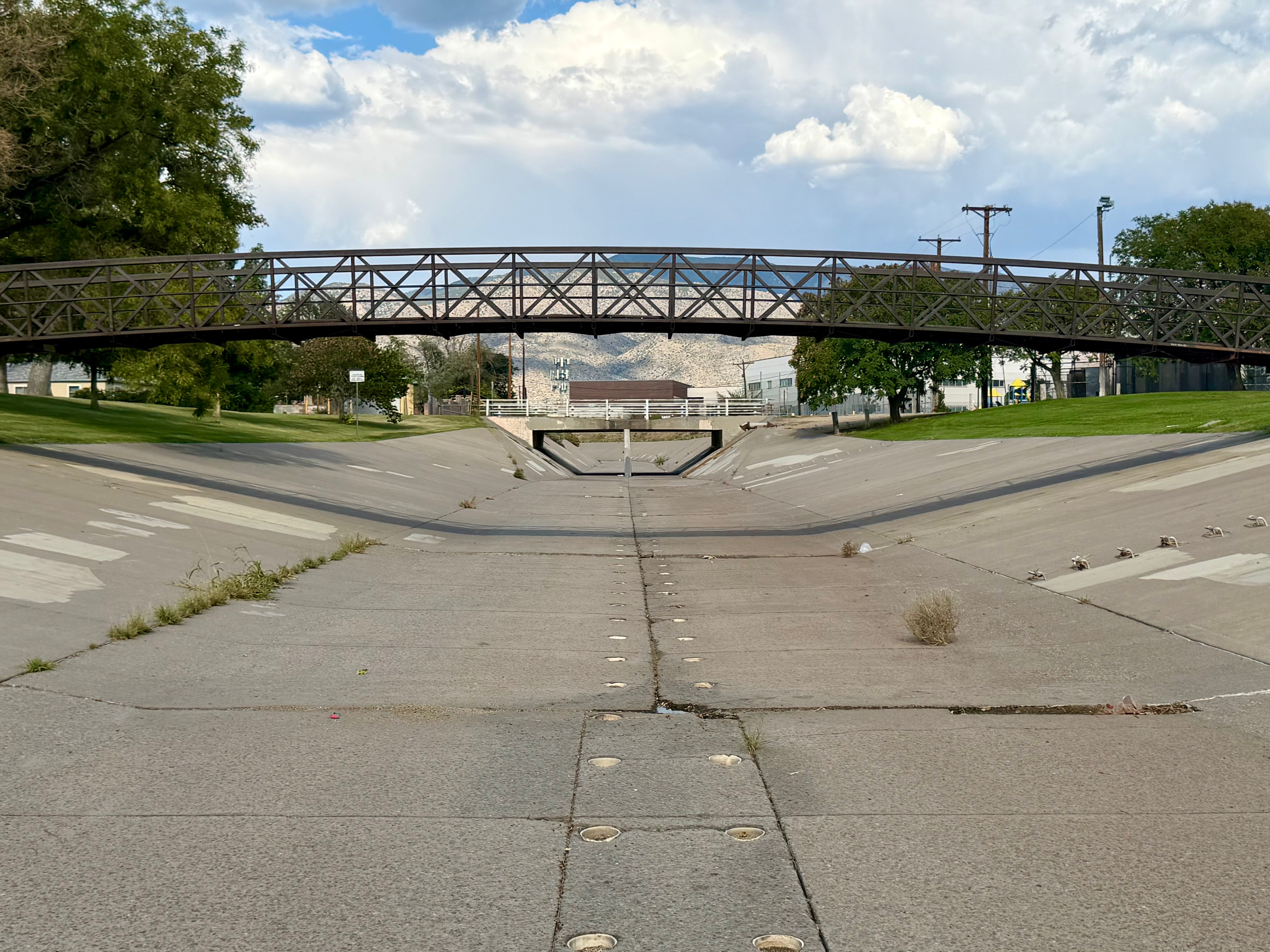
This post departs from my usual focus on Boston, since I just spent two weeks in my beautiful hometown, Albuquerque, New Mexico. Though my time outside was curtailed by a heat wave, I took an afternoon to revisit a piece of urban infrastructure I’ve been thinking about recently: the city’s arroyos and diversion channels.
Natural arroyos are a common feature of the New Mexican landscape; these drainage channels are almost always dry but fill quickly with water in a heavy rainstorm. In urbanized areas, concrete-lined arroyos and wide diversion channels have been constructed across the city for flood control. They were a fixture of my experience growing up in the city, yet they often fall into the background, so I never had a good sense of their geography.
Then a few years ago I watched Season 4 of Stranger Things on Netflix, part of which was filmed in Albuquerque (as a stand-in for California). In one scene, Eleven walks across a wooden bridge below which a large group of teenagers are hanging out in a wide concrete area that looked like a skatepark.
Except it wasn’t a skatepark, it was the Embudo Arroyo, a sloping concrete channel that cuts through neighborhoods, under streets, and across parks in the Northeast Heights. I felt a thrill of recognition that I’d felt throughout the season at seeing former haunts on the screen (the season also featured a house across the street from my childhood home). But I also felt an instinctive sense of alarm: What were all those kids doing in the arroyo?
Concrete arroyos like this look ideal for skateboarding, biking, or an urban walk. As a teenager I did all those things in them—a bit. It was always a little surreptitious, with a couple of friends at the most, not a big public gathering out in the open like in this scene. Arroyos were not really a place to gather or linger.
Every kid in Albuquerque is impressed with a fear of ditches and arroyos. They might look like perfect playgrounds, but they’re dangerous. “Ditches are deadly. Stay away!” The public service announcement is soldered into my neurons. The favored ghost story to scare each other at slumber parties was of La Llorona, the weeping woman in a white dress who haunts ditches.
But until I watched that scene from Stranger Things, I didn’t think much about the experience of living in a city crossed by forbidden channels, or the story behind them.
That story begins in the physical geography of Albuquerque. Most of the city lies on gently sloping land between the Rio Grande, which flows through a volcanic rift, and the steep Sandia Mountains to the east, which formed when the rift opened and sank. Historically, during rainstorms the river would swell far beyond its usual banks, filling the river valley. Water would rush down from the mountains, finding paths toward the river across the alluvial plain through arroyos.
The river valley was the early population center of Albuquerque, and it has for centuries been modified by a system of irrigation ditches called acequias. In the early 20th century, government-led projects sought to transform the river’s dynamic system of wetlands into dry ground with more aggressive ditching, and to control its unpredictable floods. After World War II, a growing Anglo population led to a development boom in “the Heights” to the east. The development, spurred in large part by Sandia Labs and its connection to Los Alamos National Laboratory, blanketed the plain with a grid of wide commercial arterials infilled with housing. That development interrupted the natural mountain-to-river flow of stormwater.
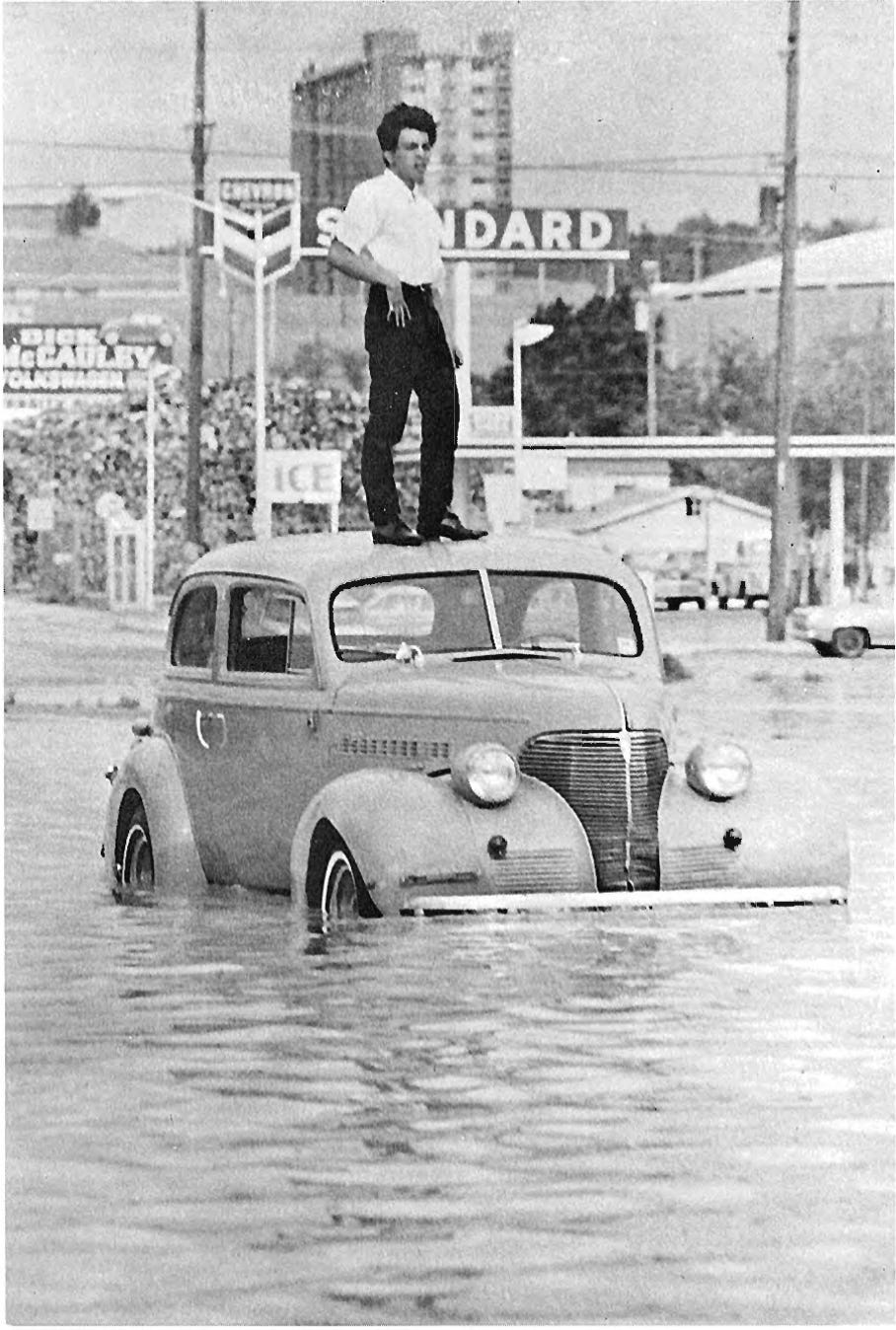
Midcentury photos depict cars steeped in floodwaters along downtown commercial corridors. The desert’s boisterous precipitation patterns were now considered “flooding” because they disrupted people’s lives and infrastructure.
The US Army Corps—the ultimate purveyor of concrete solutions—proposed a set of diversion channels that sliced through the city and joined with the Rio Grande. The first organization charged with raising a local share of funds for the project failed, but in 1963 the Albuquerque Metropolitan Arroyo Flood Control Authority (AMAFCA) was created to manage the project. It later rerouted and concretized the Embudo Arroyo and other smaller arroyos to funnel rainwater toward these diversion channels. AMAFCA now oversees 77 miles of channels throughout the city along with other flood control infrastructure.
A common theme in environmental studies is that today’s environmental problems are caused by yesterday’s solutions. By solving for a single problem—flooding—the channel system protected development but created new problems. It was premised on a view that stormwater is a waste product, not the lifeblood of the desert. Water was whisked downstream rather than being allowed to soak into the ground to feed vegetation and refresh aquifers. Concrete kept the channels from forming the rich ecosystems of natural arroyos. The rushing water often carried pollution and debris to the river.
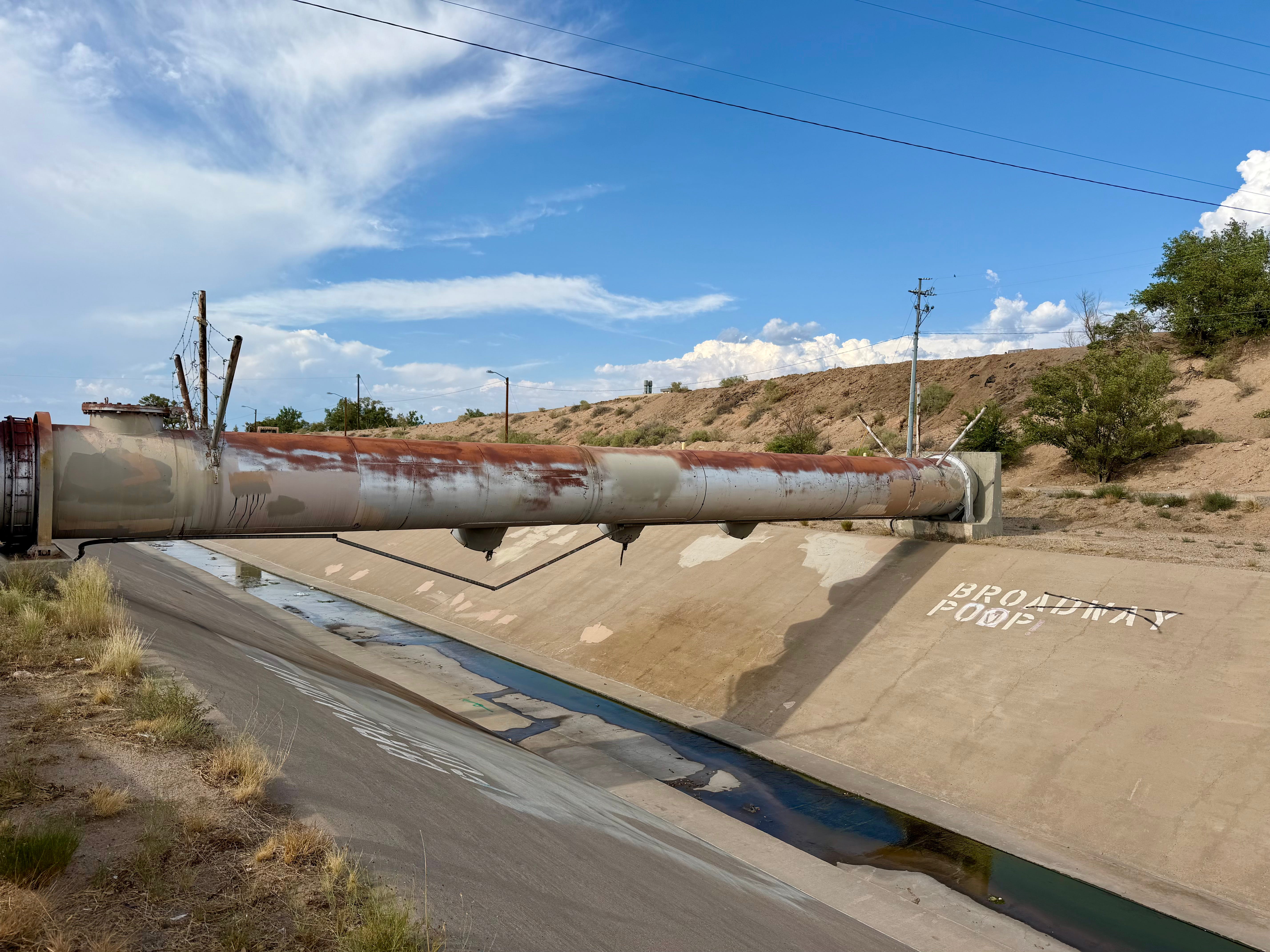
Moreover, there was a tragic consequence to building channels that speed floodwaters downstream: ditches become, well, even more deadly.
I could not find a tally of how many people have been killed in flash floods in Albuquerque’s arroyos, but year after year, decade after decade, deaths accumulate. During my recent visit, we had relatively little rain, yet even a short burst was enough to cause an arroyo death.
Rather than change its infrastructure to address these dangers, AMAFCA has preferred a social solution to the problem. Hence the education campaigns.
While an account of Albuquerque’s diversion channels published by AMAFCA in 1974 depicts children playing in the Embudo Arroyo, by the time I was a kid, they were not sold as recreational spaces. La Llorona got a public service makeover as the Ditch Witch, who appeared on T-shirts and bumper stickers reminding kids to stay out of ditches.

Today, the witch has been ditched in favor of an amorphous blue furry monster. Every kid is asked to take a pledge to Ditch the Ditches, and AMAFCA offers coloring books depicting the terrors of going into an arroyo, “even on a sunny day.” The average age of people killed in the city’s arroyos (33) seems to support the effectiveness of the campaigns in keeping kids out.
It also explains why my heart palpitates seeing an after-school social in an arroyo depicted on TV.
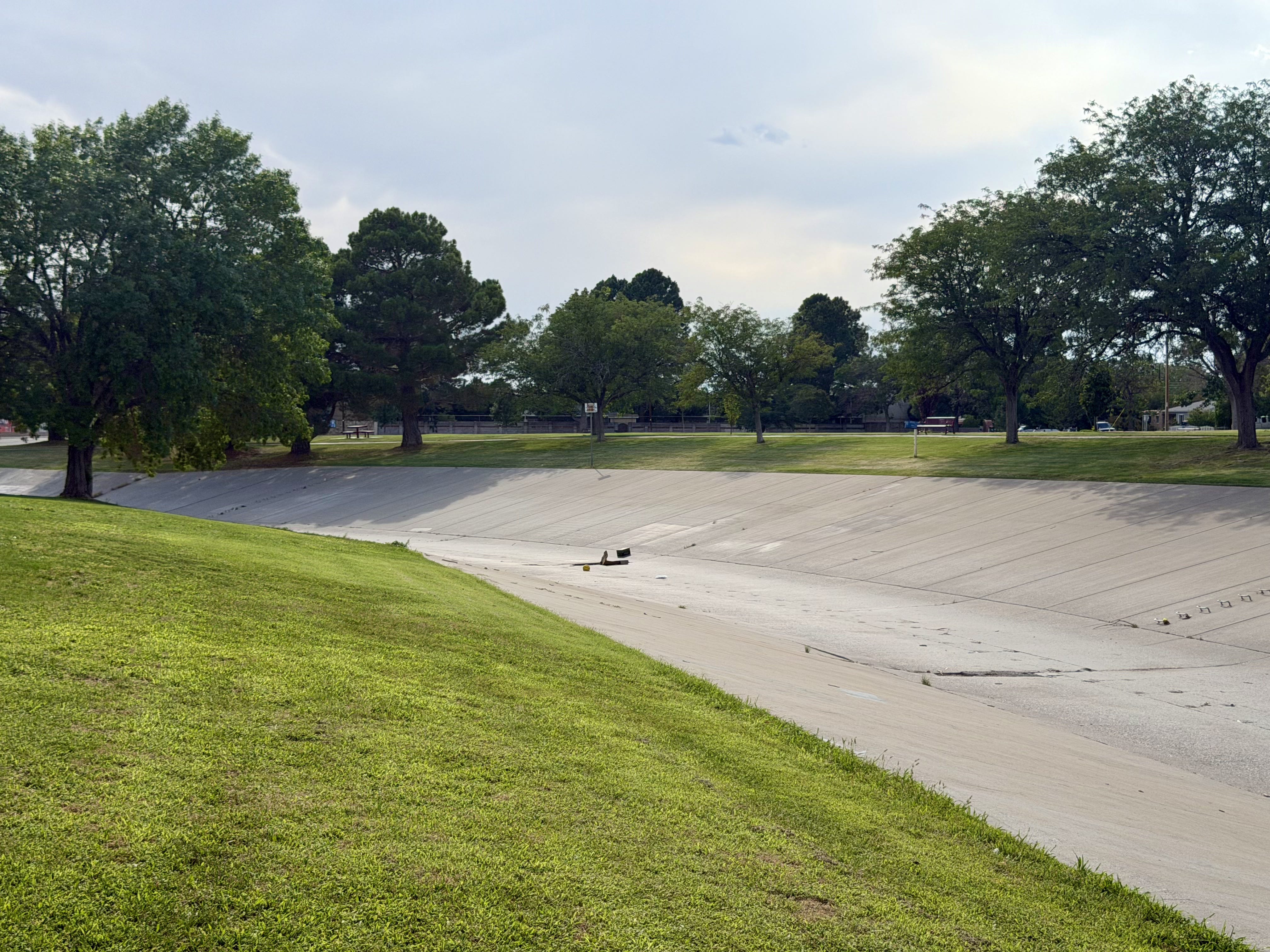
But forbidding people from going into the arroyos also leaves acres of intriguing, traffic-free open space in the heart of the city that is effectively unused. The city has done some work to change that: on a hot day I found a fair number of people walking and biking along the North Diversion Channel Trail, which parallels the largest channel for more than eight miles across the city.
But when I retraced the location of the Stranger Things scene from memory, the arroyo was empty as expected. It is disconnected, both ecologically and socially. A lacuna in the public realm, right in the middle of a park.
Great article Courtney. Didn’t know about the arroyos. So interesting what happens when we (inadvertently?) interfere with nature for our needs.. I’ll have ti rewatch those ST episodes:)
Courtney— interesting about the arroyos. Was there a better solution at the time that could have been done.? Or do we look at it thru the lens of what we could do now?