


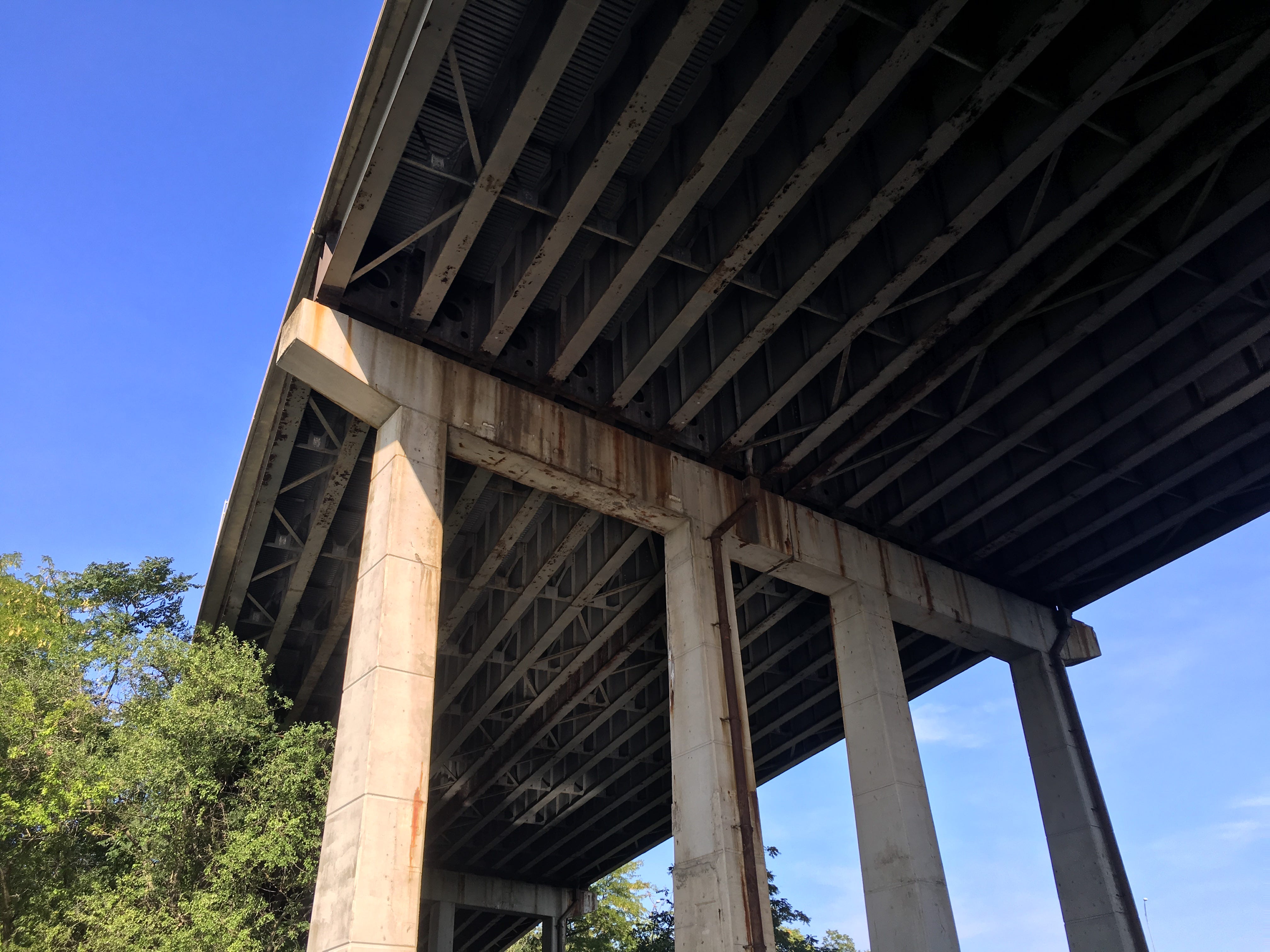
When you look around your immediate environment, where do you see nature? If you live in an urban area like me, you might see it in your front yard, or a local park, or street trees lining your neighborhood. But what about the streets themselves? Or your house? Or the underground sewer and gas lines that you depend on?
A couple of years ago, I wrote an essay for the Boston Globe Magazine articulating an idea that had kicked around in my mind for years: The belief that we are separate from nature is at the root of a lot of urban problems. When we teach kids about urban ecology, for instance, we emphasize the living stuff in cities, like maples, robins, and squirrels. We talk less about sewer systems and energy grids, how they work and how they interact with natural systems. This is the thought that put me on the path to create this newsletter.
Why write a newsletter about nature focused on urban areas? This is a question I’ve often asked myself.
If I think about the places that have had most significance for me, it’s almost always somewhere non-urban. The stillness of the Utah desert in Canyonlands National Park. The soft azure waters in Havasu canyon. A moment in my adolescence looking across a snowy hillside in New Mexico. Staring at the ocean along the coasts I’ve visited in my life.
If I’m honest, a big part of me has never been a city person.
I’ve always imagined myself living away from a city—someday. Yet here I am, middle aged and still living an urban life. Not just living it, but writing about it, studying it, making urbanity my life’s work as a writer, researcher, and educator. I might have pursued opportunities to live closer to nature or to build them into my writing and research. Instead I chose to focus on topics like urban nature, urban ecology, urban climate change planning. Why?
What I’ve been circling around, I realize, is not just an intellectual curiosity about cities but a desire to see something in them beyond the obvious, and a belief that they can be more than we give them credit for. That is, in many ways, what The Nature We Make is about.
I came to this realization while trying to declutter my bookshelves. Buying a book is always an act of optimism: whether the book lives up to our expectations or not—whether we even find time to read it—the choice signals the kind of insight we hope to find. Looking over the books I’ve collected over the past quarter-century, it’s clear I’ve always gravitated to writing that plumbs the connections between cities and nature. Mine are always about urban nature, histories of places, and ideas and theories about urban environments.
Many years ago, I wrote my own book about the natural history of pigeons with this goal in mind: how to see an urban bird that is often denigrated as part of nature. The book, Superdove, allowed me to poke at what’s sometimes called the human-nature (or nature-culture) dichotomy, the idea that humans are separate from nature.
There was a flurry of scholarship in the late 1990s and early 2000s that challenged the human-nature dichotomy from many disciplinary angles: urban ecology, geography, environmental history, philosophy. This academic literature, while very cool and worth reading, has not necessarily permeated our day-to-day thinking. And, you might argue, it’s an esoteric debate.
But I believe that our mental separation between people and nature matters. It keeps us from fully understanding our world and fixing environmental problems. And it leaves us feeling disconnected from the places we inhabit. As I wrote in the Boston Globe piece, “many city dwellers grow up inhabiting an environment they don’t really understand.” That has real consequences. I concluded that we don’t necessarily need to connect more with nature to solve our environmental problems: we need to cultivate “ecological wisdom and a sense of stewardship of the built environment.” Otherwise, we leave all the decisions about infrastructure to engineers and planners rather than fighting for them as we would fight for trees and parks.
Lately, I’ve wondered: Why is it so hard to feel connected to the urban environment around us? Can I learn to appreciate it in the same ways I appreciate those wild places? Can I better appreciate the profound differences by seeing both of them as vital and interconnected?
This is the challenge I’m taking up in The Nature We Make. Some of the questions I plan to explore are:
How do urban environments work? I’m looking at surprising ways that our human-shaped built environment interacts with the natural one.
How can we see and understand our environment in new ways? I’m drawing on data and science to answer questions, but my ultimate aim is to pursue connection.
How does this understanding open up new possibilities of action? This is not about easy technological fixes. It’s about perspective. I believe that the way we frame our reality shapes the solutions we see as possible.
This post was originally published at https://thenaturewemake.net.
.