


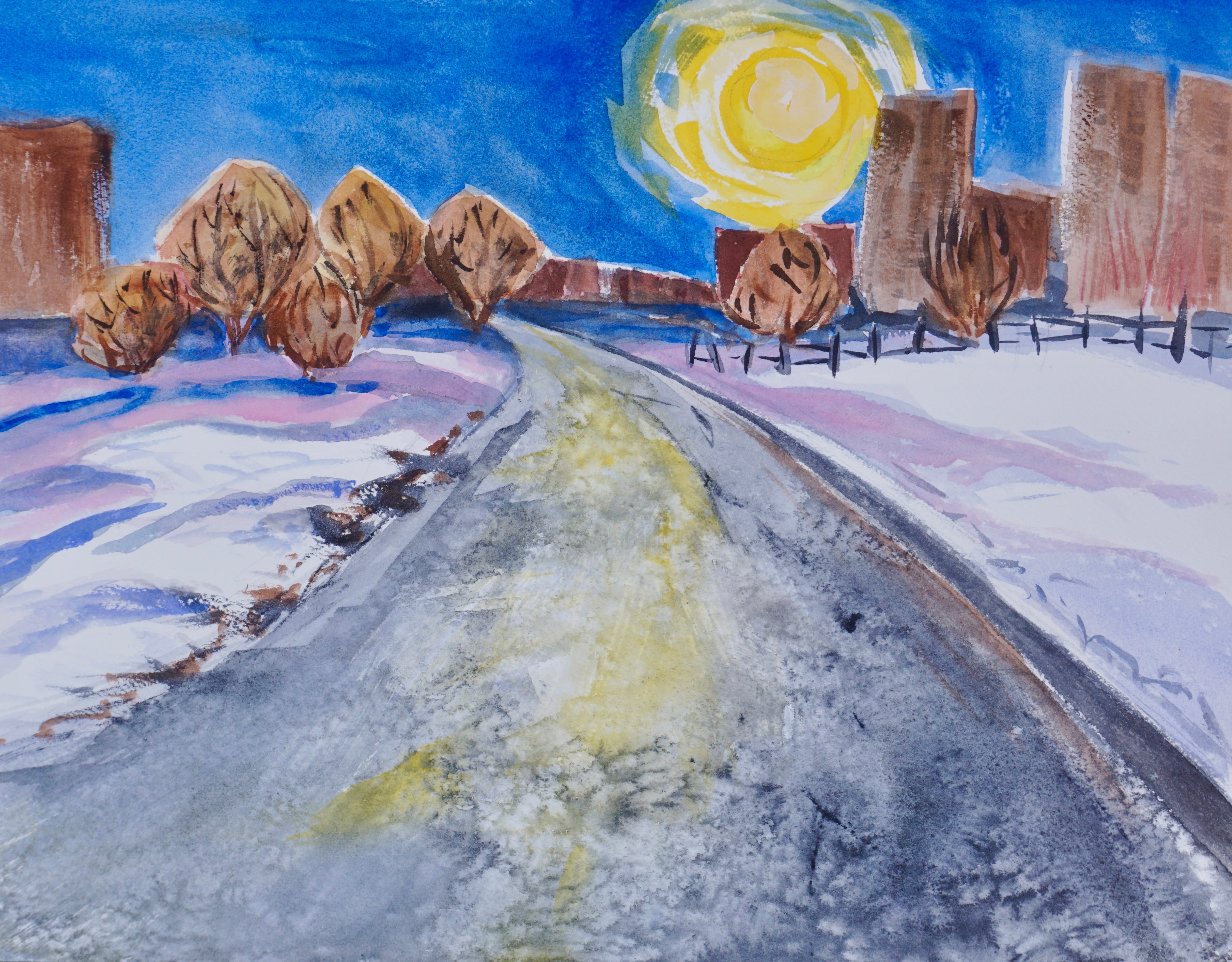

This has been a pretty brutal winter in Boston; we’ve had over 60 inches of snow. Snow banks have lingered, crowding cars and sidewalks and making everyone grumpy (I heard about multiple altercations over parking spots in my neighborhood, including a stabbing). Recent big snows in the Northeast have surprised a region grown accustomed to thin winters. But I’d like to focus on snow’s material companion, its obbligato in the urban environment: salt.
Road salt is used lavishly here. And a large part of winters in Boston is what I’ll call salt weather, that stretch of weeks when there’s no snow, rain, or “wintry mix” as they say here, only cascades of road salt left in anticipation of future storms. With nothing to melt it, the salt grinds to a fine powder under shoes and tires. It billows up along the highways, shrouding traffic in a saline fog. Walking in salt weather leaves an acrid taste on my tongue, like when you squeeze a box of baking soda too hard.
Some years I see more salt than snow. It’s forced me to realize that snow isn’t the material that most heralds winter for me—salt is. And yet we don’t celebrate the first salt of the season, or sell Christmas ornaments depicting salt crystals, or comment to a neighbor that “this is some salt we’re having.” We pretty much ignore the days we spend walking and driving through grainy clouds of dust. In the news, road salt is both celebrated as a beacon of public safety (Boston’s mayor holds a yearly press conference in front of a salt pile) and decried as an environmental harm. I think this cognitive dissonance between celebration and shame makes us ignore the hold salt has on our daily lives.
That’s because salt weather is our own creation. And while road salt is visible only in winter, it is part of a human-driven cycle that brings salt from places around the world into urban areas like Boston, where it remains even after it has washed out of sight.
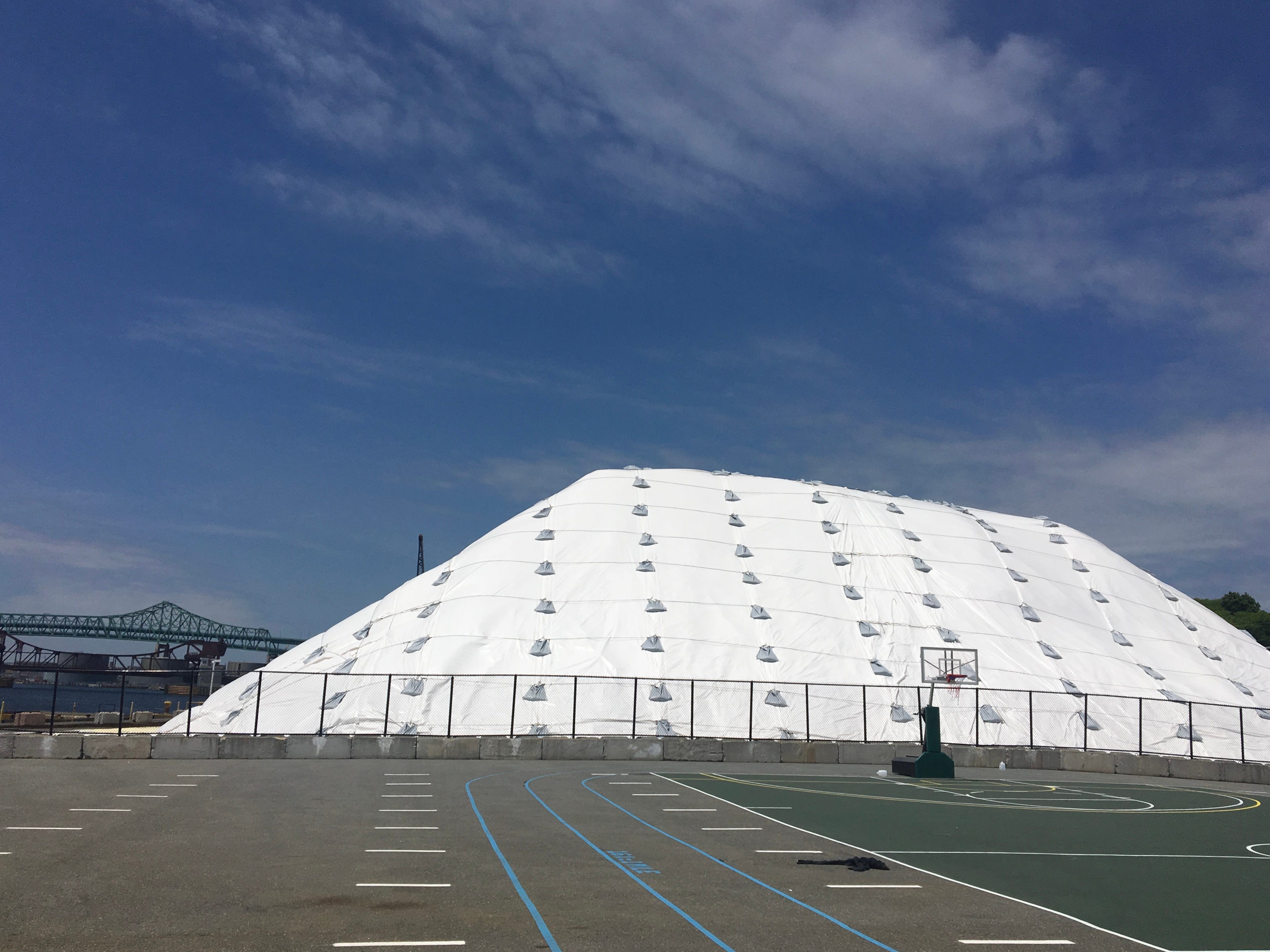
Much of the infrastructure supporting the salt cycle is hidden. Every winter in Boston, 37,000 tons of road salt is tucked away into eight storage areas across the city. And when it’s not hidden, it can be controversial. The Eastern Minerals salt pile in the adjacent city of Chelsea, which supplies salt to the entire region, has become a landmark that can easily be seen from the highway as it waxes and wanes throughout the year. Chelsea is the smallest city in Massachusetts but serves as a depot for the region’s oil, gas, and produce, exposing its population—nearly half foreign-born, and 20% living in poverty—to industrial air and water pollution. So the salt pile has been both a critical support to the region and a bane to an already-burdened neighborhood.
To mitigate the impacts of the salt pile and to integrate community and industrial needs, the design firm Landing Studio created the innovative PORT (Publicly Organized Recreation Territory) Park, which includes a shared-use area that is seasonally used for salt in the winter and for recreational space in the summer.
Also invisible is the human labor, energy, and natural environments that support salt piles like these. Our road salt is shipped in from several salt mines around the world, primarily from a vast salt field in Chile’s Atacama Desert, which also supplies a major share of the world’s lithium for batteries. About ten years ago, photographer and artist Allison Cekala traveled to Chile to trace road salt’s journey as it was blasted and processed at a mine, loaded onto a cargo ship, carried through the Panama Canal, unloaded on Chelsea’s waterfront, and picked up by trucks for distribution on the streets. Cekala said she wanted to highlight “human ingenuity, globalization and the raw beauty of the salt.” In the whitish plumes emerging from the mine in her video and photographs, I recognize the clouds forming along I-93 during salt weather, and I’m suddenly able to see how this material connects the two locations.
The images end with salt trucked through city streets. Perhaps the most invisible part of the salt cycle is what happens later, after the snow has melted and the salt gradually disintegrates. Road salt can have immediate impacts, from harming landscape plants to burning pets’ feet. But there’s an ever-growing and alarming body of research showing that accumulating seasonal cycles of salt use has profound impacts on nearby ecosystems, particularly rivers, streams, and lakes.
The most commonly used road salt is simple sodium chloride, but other minerals (calcium or magnesium chloride) are also used, as well as other chemical deicing agents. Road salt makes its way into soil, sewer drains, streams, and rivers, eventually ending up in lakes, groundwater, or coastal waters. Salt concentrations pulse in winter and spring and recede in summer, diluted by rain, but they do not disappear. Over decades of road salt use, urban lakes become many times more concentrated in sodium and chloride. Road salt reshapes habitats and creates new ones.
Northeast highways and major roads are often lined with plants like cattails, seaside goldenrod, and invasive Phragmites typically found in salt marshes. In fact, these human-created linear marshes act as inland pathways for Phragmites to spread. Less visibly, high salt concentrations harm many species from amphibians to fish to invertebrates, and can starve lakes of oxygen. Salt can build up in groundwater and drinking water supplies.
Salt ions are chemically active; they corrode concrete and metal, weathering built infrastructure and releasing metals into the environment. Collectively, the salt and metal ions from deicing lead to a buildup of what University of Maryland ecologist Sujay Kaushal and colleagues call “chemical cocktails” of nutrients, metals, and salts. They have coined the term “freshwater salinization syndrome” to describe how streams, rivers, and lakes in the United States are becoming gradually saltier and more alkaline, in part because of the liberal use of road salts.
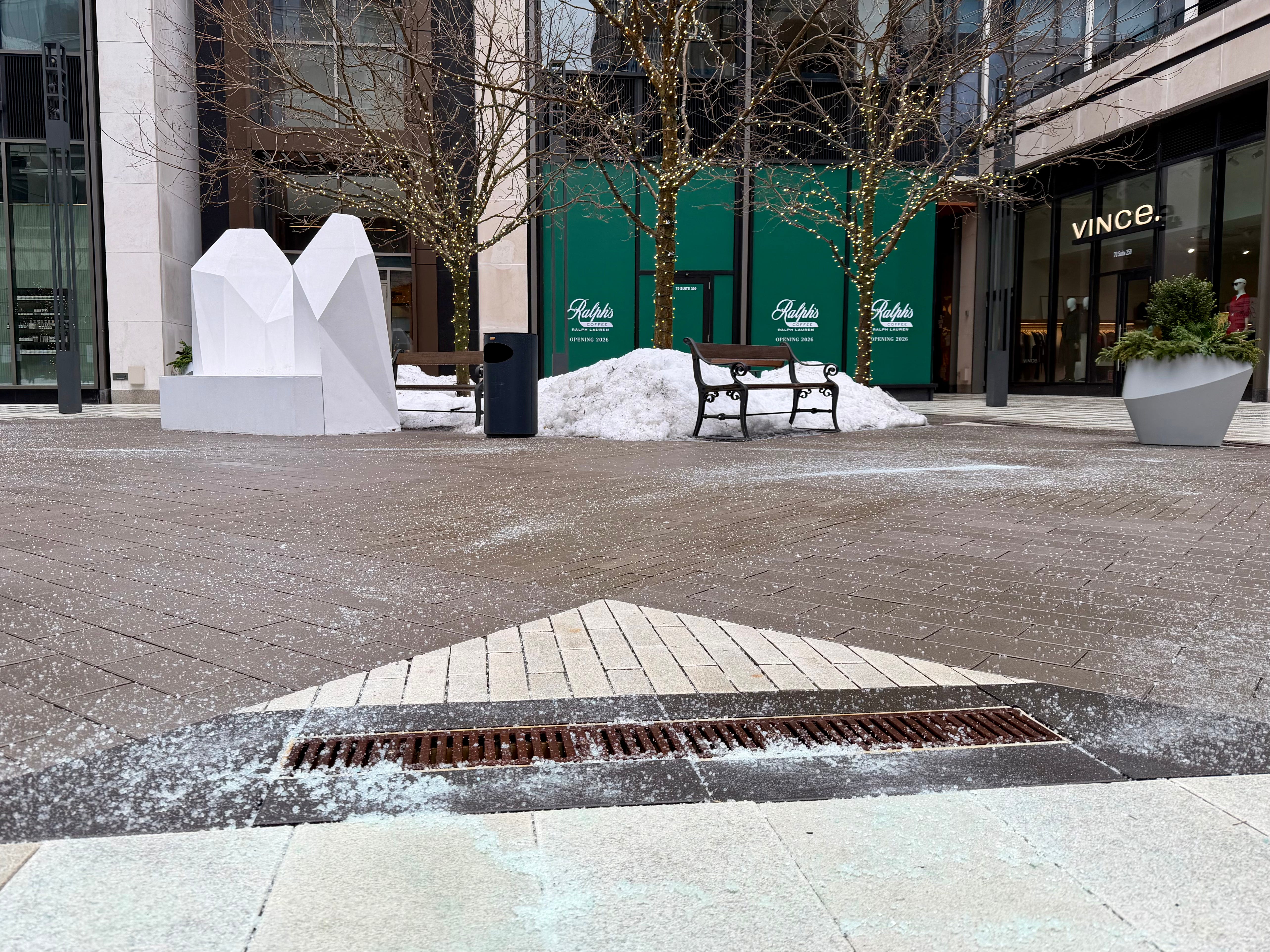
The urban salt cycle is driven by a seasonal one-directional flow from natural salt deposits to urban areas. So what happens to urban ecosystems over long periods of time? This is a fascinating question. If urban areas become so choked with salt that we notice the signals of salt pollution more, I believe our practices may shift.
This adaptation is already happening in small ways. Numerous public education efforts try to get homeowners to purchase pet-friendly ice melt or adopt less intensive practices like making a salt brine. Some communities are making decisions to reduce road salt or replace it with products made from organic materials like molasses or beets (the paths of Smith College in Northampton, where I’m teaching this semester, are coated in a brown brine that smells of soy sauce).
While there are environmentally preferable substitutes, the solution would also likely involve scaling back our salt use. And that would mean rethinking the assumption that cities don’t stop for the weather. I live on a steep hill where traction is valuable. Salt allows my daughter to get to school every day. Without it, I would not be able to make the two-hour journey to Smith once a week in this harsh winter. Salt can be a literal lifesaver for people who need ambulances and prescription medications.
Salt is the protective balm of urban life; no wonder we slather it on our roads and sidewalks like sunscreen. But unless we want to leave our children with a much saltier future, the urban salt cycle will need to evolve.