


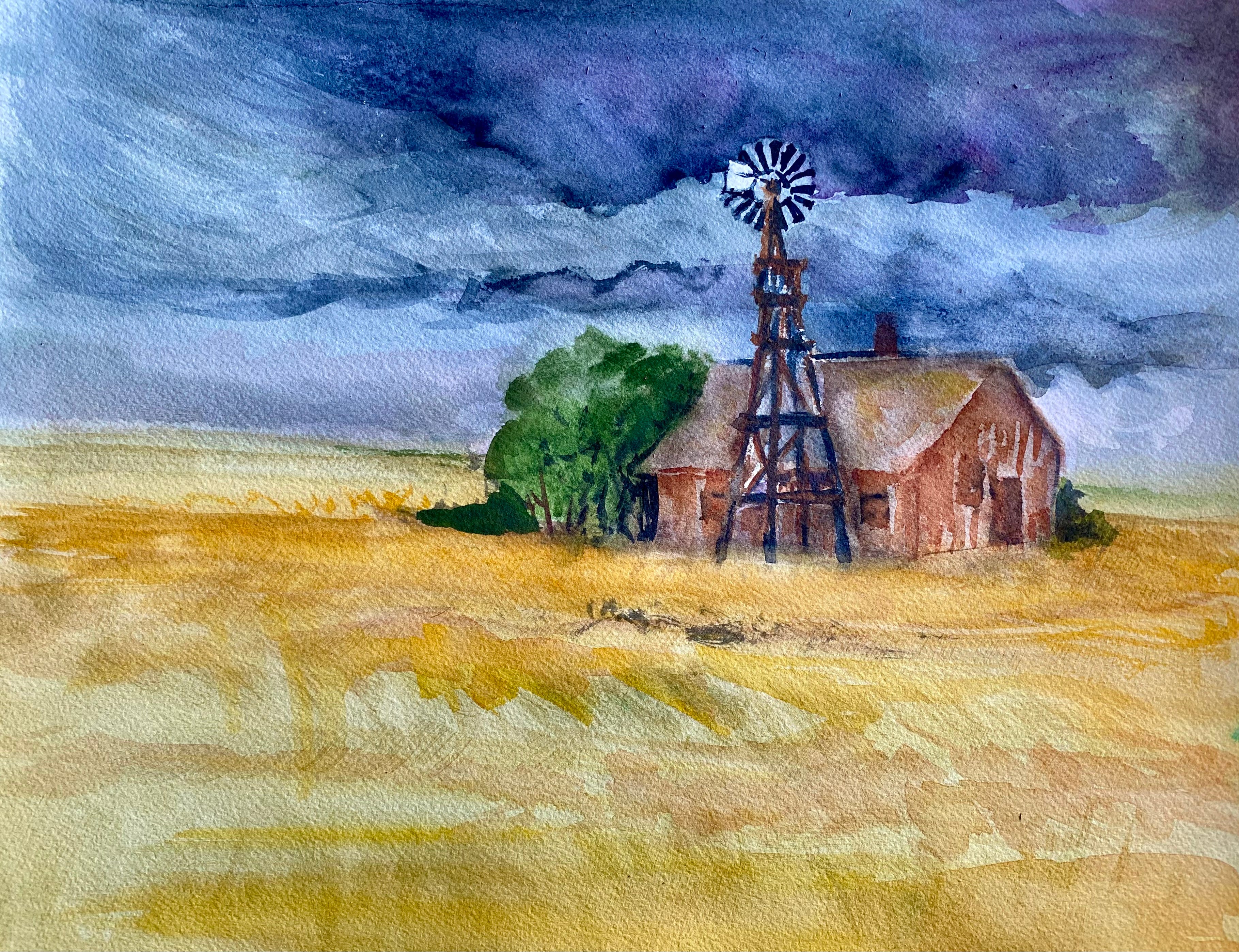

Recently I began reading my daughter Little House in the Big Woods, the first book in the Laura Ingalls Wilder series that I read devotedly as a kid. The Little House books, which recount a loosely autobiographical story of her family’s frontier life, have received some recent critique, particularly for perpetuating racist stereotypes. But coming back to them, I was reminded of their singular ability to immerse the reader in the details of another world. As a child, I carried mental images from those books that were hard to distinguish from my own memories: making maple candy in a pan of snow, riding in a covered wagon, walking across the Kansas prairie, sweeping the floor of a sod house, sewing dresses from bolts of calico. I could practically taste the salt pork.
But sometimes, instead of imagining what it would be like to be a 19th century frontier girl, I’d reverse things. As I rode in the backseat of my family’s car, I’d imagine that Laura had traveled through time and ended up in the present moment, by my side. I thought about the shock she must feel, as she sat next to me, to be moving so swiftly down paved roads and seeing the gleaming metal cars, traffic lights, parking lots, and strip malls. As her friend, I would explain how everything worked. We use gasoline to power our cars. The streets are all paved now. There are huge supermarkets for food. We have toys made out of plastic instead of rag dolls. Girls can wear pants now!
Looking back, I see that this game was a way of viewing my own world as new and unfamiliar. Imagining that I was Laura’s companion forced me to snap out of the lull of familiarity and appreciate how strange, fast, and big the world was.
I found a similar fantasy in Deb Chachra’s excellent book, How Infrastructure Works: Inside the Systems That Shape Our World, in which Chachra, a materials scientist at Olin College, looks around her 19th century apartment in Cambridge, Massachusetts. “I occasionally think about what the lives of the people who were in the space before me were like,” she writes, “but I also think about the converse: What if the original occupants of my building came a century and half forward in time to my home in the present day—what would surprise them the most?”
What I think Chachra is trying to do, and what I was trying to do in my childhood fantasy, was to induce a kind of future shock within an everyday experience.
The term “future shock” was coined in the 1970s to describe an intense disorientation or sickness caused by the pace of technological progress. But while it’s common to feel anxious and disoriented by change—the rapid emergence of AI today is a perfect example—we’re actually quite good at letting changing conditions become a new norm, rendering them invisible. Familiar things lose salience. As Chachra says: “Humans are disturbingly good at filtering out anything in our vision that we’re either accustomed to seeing or which doesn’t appear meaningful.” She points out that infrastructure (and I would include just about any part of the built world) is especially susceptible to becoming unseen.
Imagining yourself as a visitor from another time is one way to see the familiar anew. Chachra writes that her apartment’s former residents would be amazed by the amount of clothing and objects in her apartment, how artificially bright everything is, and how washing machines and other devices perform work for her.
As an adult, I learned how Laura Ingalls Wilder’s books, first published during the Great Depression, were motivated by nostalgia for an earlier time and stood in contrast to a world that was advancing toward increasing urbanization, technology, interdependence, and expanding government. Yet the scenarios described in those books also underscored the perils of frontier life, including disease, severe cold, and near starvation.
Sociologists sometimes describe our postindustrial world as a “risk society,” because we are increasingly focused less on dealing with external threats and more on understanding and managing risks that society itself produces: economic downturns, war, nuclear accidents, pollution, environmental degradation, climate change. As a kid, I thought how crowded and even frightening the modern world might look to Laura.
But now I also see how Laura might be struck by how safe and comfortable our built world is. Many of us spend our days within a narrow thermal range and an optimal light level, walk on surfaces designed for human ambulation, drink water that we know is not contaminated, and strain our bodies mostly in exercise classes. As Chachra reminds us, because it has become so mundane to live this way, we forget the sheer amount of energy, materials, and social organization required to create this level of safety and comfort.
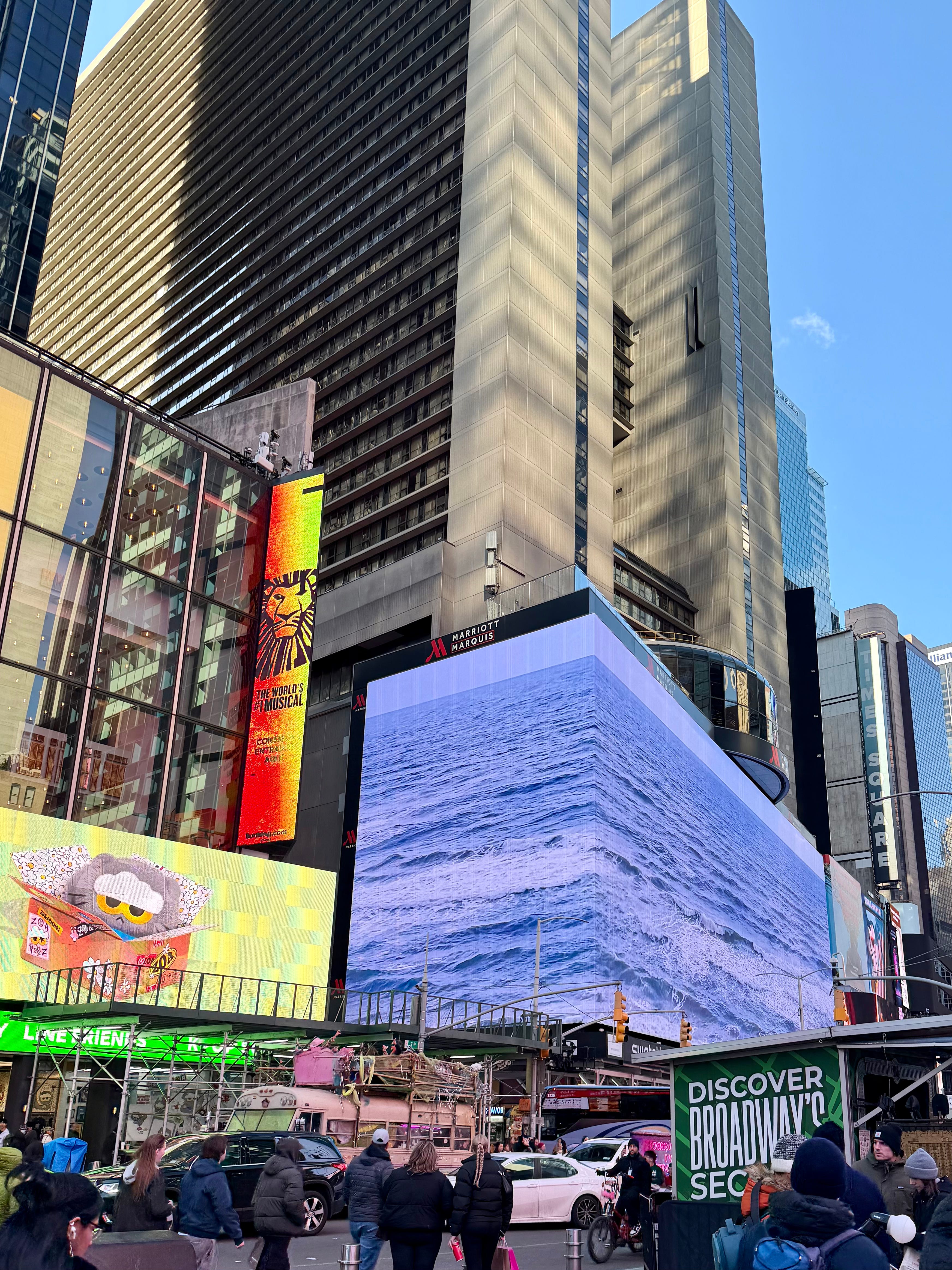

It’s easy to accept the illusion that this manufactured world is disconnected from nature, in contrast to the idealized life in the woods and prairie. But the stuff that fills my house and powers my devices comes from somewhere. Every technological innovation embeds us in nature more deeply, but often to far-flung places that supply us with resources and energy.
I’ve written before about how to feel more connected to the built environment by noticing natural processes at work. Another way to foster connection is to break out of the trance of mundanity and let your mind be blown by the built world around you. The purpose of cultivating “now shock” is not just to marvel at technology but to appreciate the materials and processes that shape our world today. The more I stop to notice, to really see what’s around me, the more I understand that letting infrastructure become invisible is a convenient fantasy.