


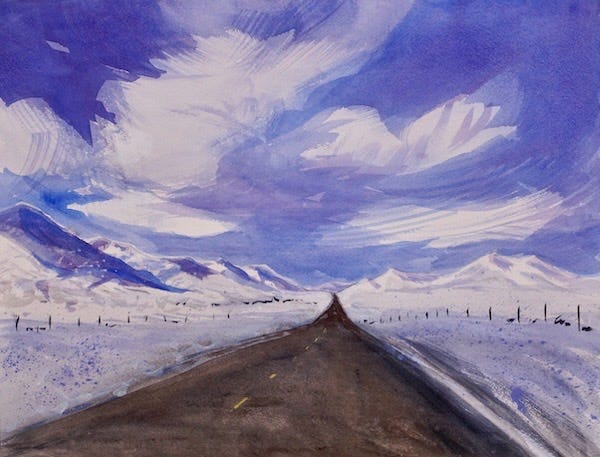
When I was growing up in Albuquerque, New Mexico, most of our family vacations were by car. They involved driving down long stretches of interstate highway to see a national park or visit grandparents in Arizona and California. This was before screen time, and much of the time I stared out at the scenery: distant mountains and plains dotted with chaparral, decrepit roadside shacks, miles of Stuckey’s billboards.
But one of my favorite things to watch was the road itself. In the hot summer, there was a shimmering, undulating pool of what looked like water just at the farthest visible spot on the road. As we moved toward it, it seemed to glimmer and dance teasingly, then shrink to a thin puddle, then just a line of glitter droplets. Then it vanished completely, only to reform at some farther dip in the highway.
I recently thought about these mirages along desert highways in my youth as I was reading through “Asphalt: A History,” by historian Kenneth O’Reilly, which details all the ways that asphalt has literally shaped our world. These days, my associations with asphalt are pretty negative. It blankets land, disrupts ecosystems, contributes to flooding, and exacerbates urban heat (the intense heat generated by black asphalt is what creates the light refraction responsible for highway mirages). Asphalt production is polluting and asphalt roads carry most of the greenhouse-gas emitting vehicle traffic on the planet.1
It’s easy to vilify asphalt as the ultimate harbinger of the Anthropocene, the paver of paradise. But my memory reminded me that asphalt is also, more than just about any material, part of the intimate lived experience of most humans.
O’Reilly puts this more starkly in his introduction:
“Asphalt...is present nearly everywhere we are present, so baked into the tale of our species that it rules even in absence. Too often for those who live where asphalt has not yet spread, there is only mud and poverty or dust and poverty. For virtually everyone else, the only true escape from asphalt is death.”
Think of how much collective time you’ve spent in the presence of asphalt, how many moments it has been in your view, how many experiences it has created, both life-changing and mundane: road trips, shopping trips, basketball games, bike rides, workplace commutes.
I’d like to explore asphalt in future posts about road ecology, urban planning, and material life cycles. But for now I want to pause to appreciate the sheer scale of asphalt’s presence and appreciate how closely it is linked to our lives.
Technically, “asphalt” or bitumen is the sticky substance that serves as a binding agent in roads and is also used to make shingles, coat landfills and reservoirs, and other uses. The road material we often call asphalt is a mixture of a small amount of bitumen or asphalt binder and a much larger amount of sand, gravel, and crushed stone, collectively called aggregate. Bitumen acts like the wet ingredients in your oatmeal cookie dough, keeping the dry ingredients stuck together into a spreadable substance.
Like many of our ubiquitous urban materials, asphalt has a natural form. It is found in places where petroleum has been buried and gradually transformed under high pressure to a sticky, viscous, slow-flowing substance. Asphalt, like all petroleum products, is made of life: largely, ancient single-celled algae and plants that lived, died, and were buried on the floor of ocean and lake beds, and over millennia became mixed into Earth’s geology. It is viscous when heated and collects in underground lakes and tar pits found in Canada, the U.S., Brazil, Trinidad, and other places, and sometimes oozes to the surface as seeps or asphalt volcanoes along the seafloor. Sticky tar pits are one of our best sources of fossil records as they would trap and preserve life, including the bodies of large animals.
Natural asphalts were first used as waterproof coatings, and later were hauled out of the ground and transported around the world as a paving. But mining and transporting asphalt was labor-intensive, and in the late 19th century engineers developed techniques to create asphalt from refining petroleum. Petroleum can be heated and chemically altered to produce cocktails of different hydrocarbons (compounds of carbon and hydrogen) with different properties that collectively shape a great deal of the human-built world.
When asphalt is heated, it releases volatile organic compounds (VOCs), which create the uniquely headache-inducing aroma that seems to go right past our noses and burrow into brain cells and arteries. And yet, depending on your experience, it may not be entirely unpleasant: the smell of asphalt might evoke a sense of progress and industriousness, or, as in the case of those highways I traveled as a kid, the promise of the open road.
The urban environments we have today are completely dependent on asphalt. Its character suits urbanity. It is a physical binding agent that can bring gravel and stones together in a unified substance. It can be heated and spread like peanut butter but then harden into something relatively solid and impenetrable. Although anyone who drives on asphalt roads knows that its solidity is easily cracked, broken, and slumped, asphalt is for a time sturdy and smooth. Think of the moment when you’re driving on an old highway and your wheels suddenly encounter a newly paved surface—that frictionless sensation like when airplane wheels leave tarmac.
Asphalt is a social binding agent too. It is connective tissue that literally joins us together in communities, cities, nations, and civilizations. The image of broken asphalt—whether a potholed urban street, an abandoned rural road, or rubble of a bombed-out city—is a proxy for social and institutional absence. But asphalt is also a social disperser; it connects us to distant places, sometimes at the expense of our own neighborhoods and local environments.
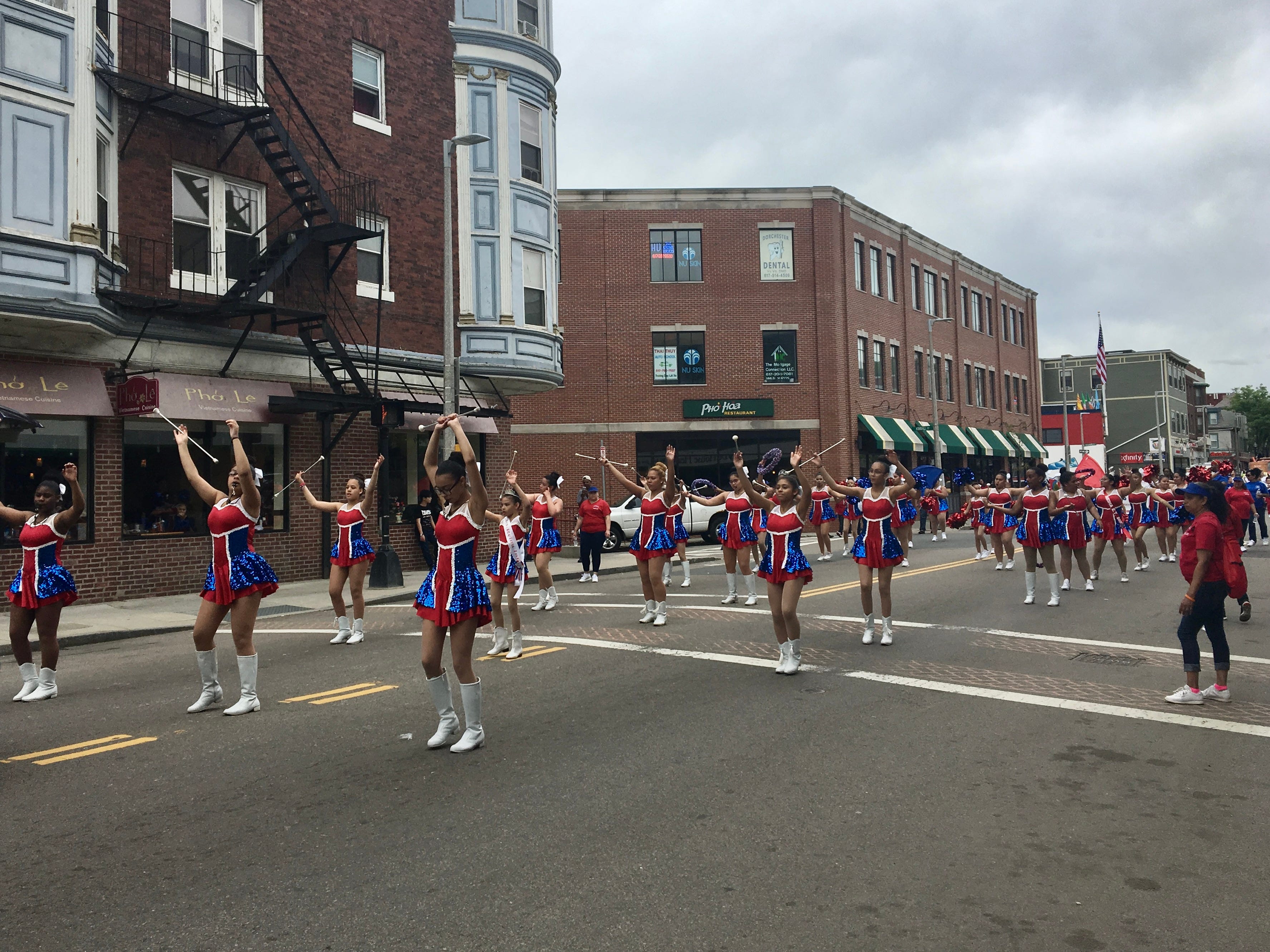
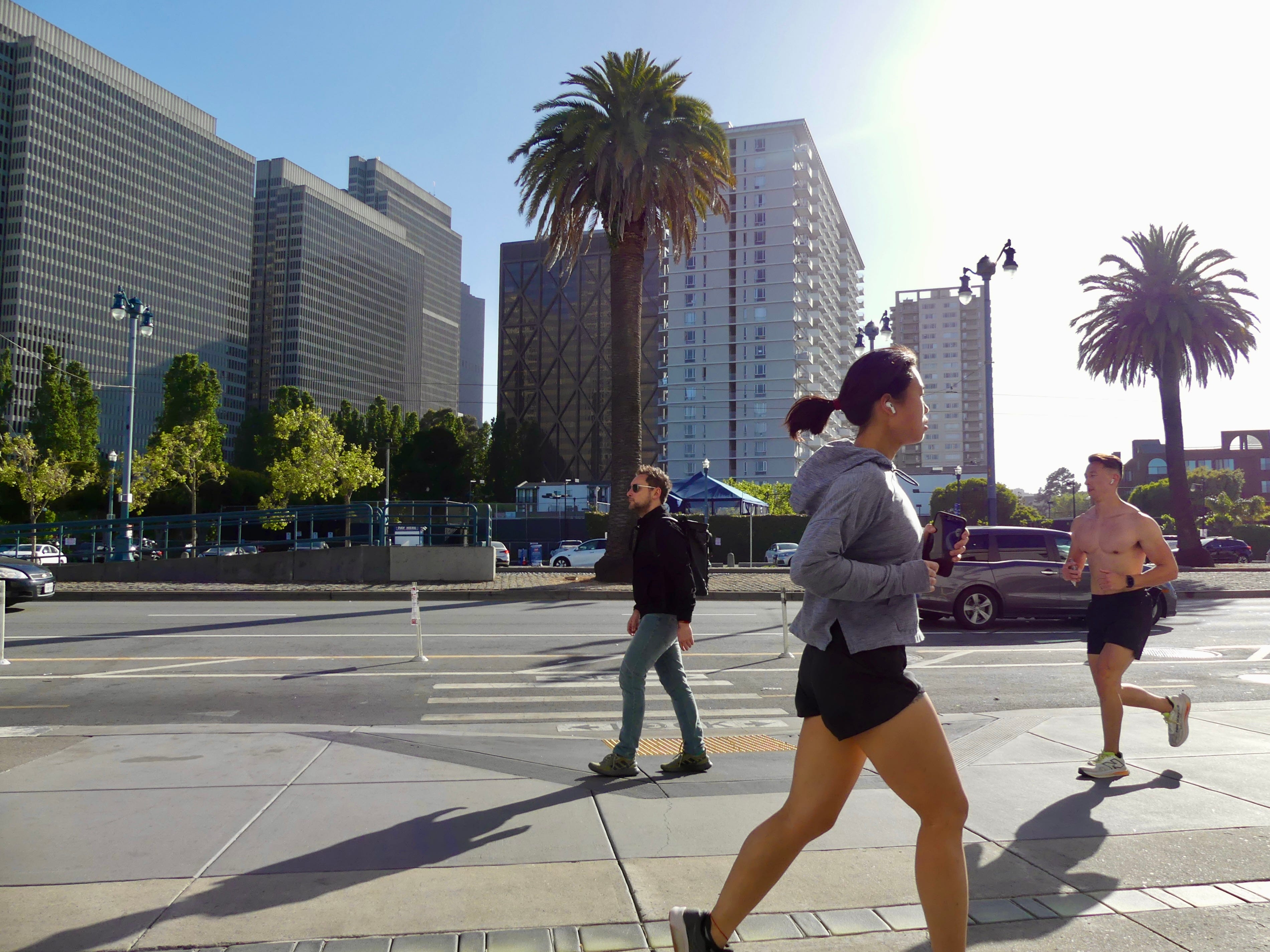
One of the groups who lobbied for paved streets even before the automobile were bicyclists, as asphalt roads made traveling much faster, more comfortable, and less fraught with mud and dust. Paved streets were also easier to clean in times when horses and their manure choked streets. But as O’Reilly explains, early efforts to pave streets in the 19th century were often met with protest, “as pavement would increase traffic volume and speed and thus destroy a street’s dual function of carrying traffic and serving as playgrounds for children and gathering places for all ages.” I find this quote stunning as a parent used to directing a young child through a neighborhood crisscrossed by death-strips. Imagine if the streets surrounding us were still places to play and gather for more than yearly block parties and parades. Asphalt made speed feel like a right.
Asphalt is now a large part of the geology of urban life. And because of that, every aspect of asphalt’s production and use is critical to shaping the urban environment for the better or worse.
Hasheminezhad, A., Ceylan, H., & Kim, S. (2024). Sustainability promotion through asphalt pavements: A review of existing tools and innovations. Sustainable Materials and Technologies, 42, e01162. https://doi.org/10.1016/j.susmat.2024.e01162
great analogy. asphalt is like fascia: when healthy, it supports energy movement; when brittle, it traps stagnation. the body and our environment follow the same laws- microcosm and macrocosm shaped by connection and energy flow